How to use this toolkit
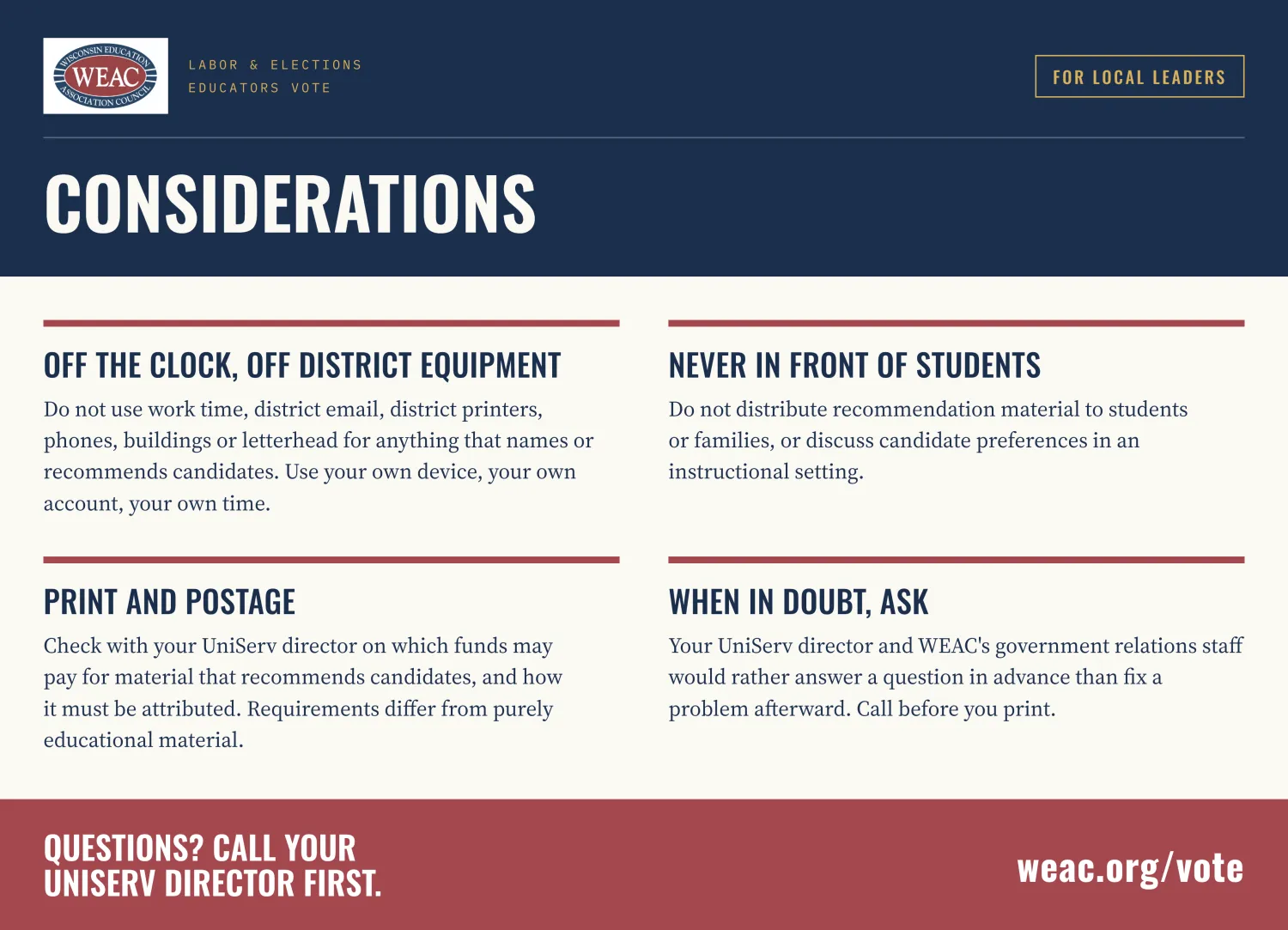
Use what fits you, sharing in conversations and on social media. Do not share using school resources nor during school hours.
3 Key Points
Serving special needs students is required. Funding them is a choice.
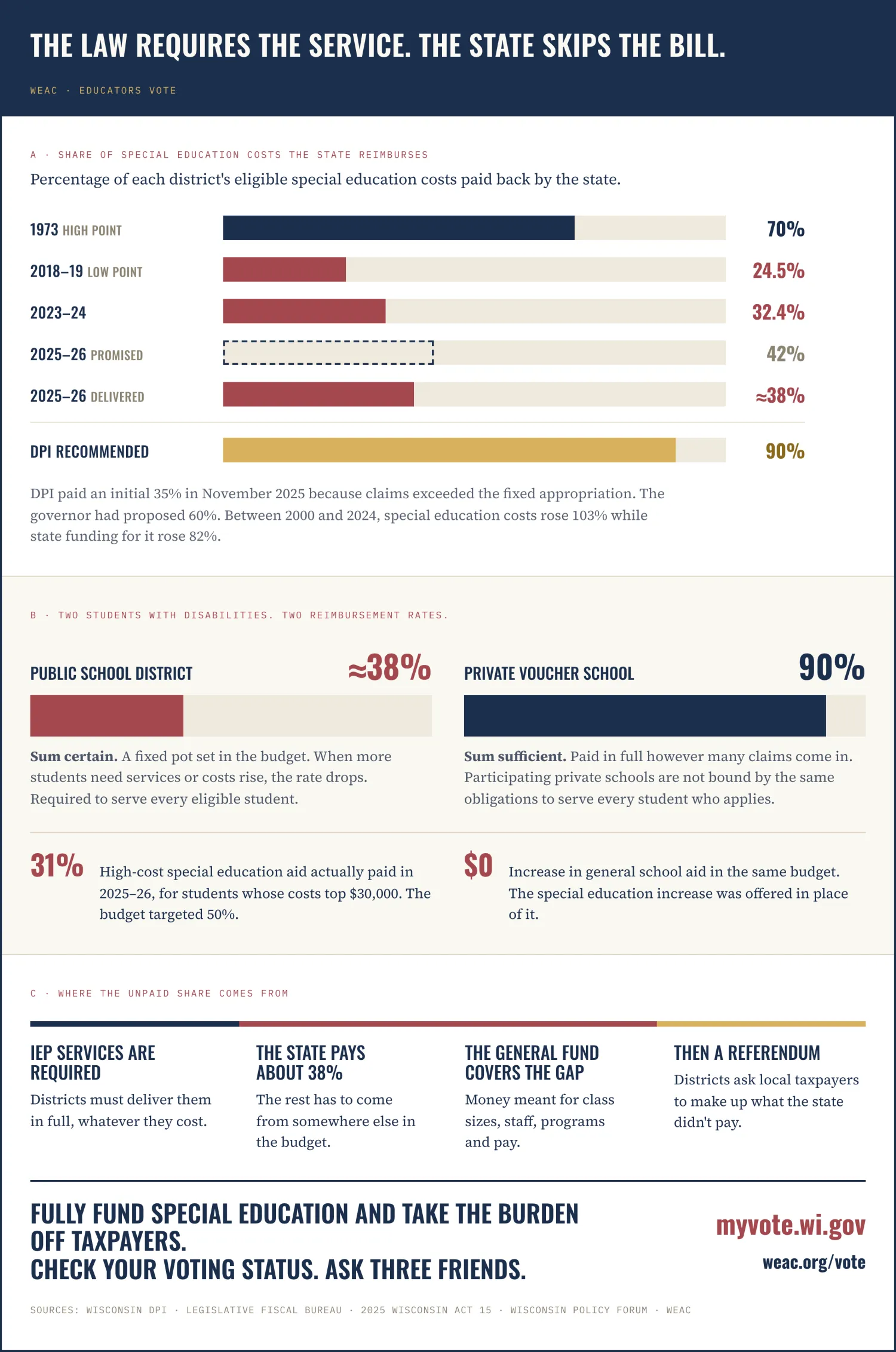
Public schools must provide every eligible student the services in their individualized education program, whatever it costs. Districts cannot cap enrollment, turn a student away or put services on hold until the money arrives. The state chooses how much of that cost it reimburses. In 1973 it covered 70%. By 2018-19 it had fallen to about 24.5%, and for most of the last decade it has hovered around 30%.
Funding must be sufficient to meet all needs.
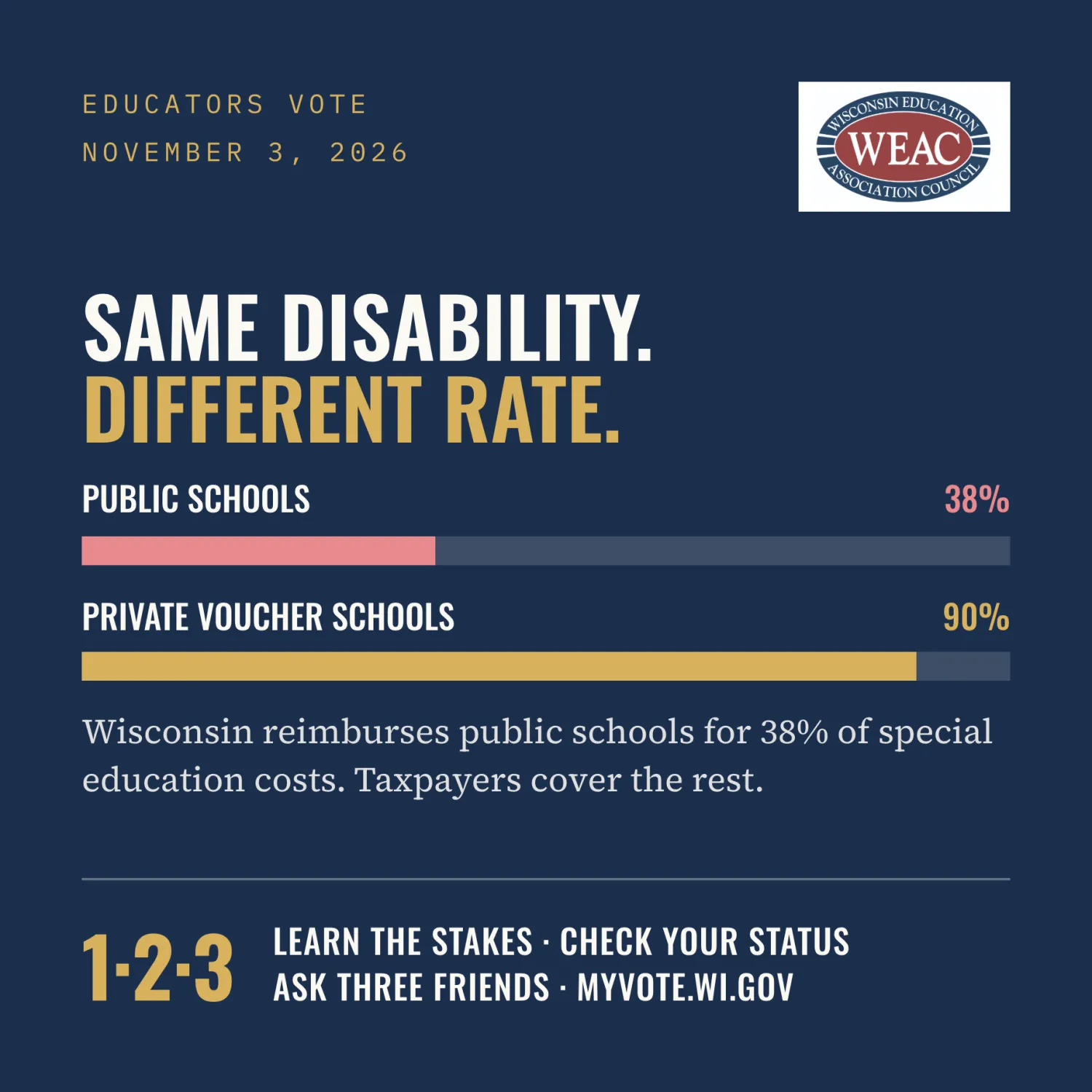
The 2025-27 budget set reimbursement at 42% this year and 45% next, well short of the 60% the governor proposed and the 90% DPI recommended. Because special education aid is sum certain, a fixed pot, the rate drops when costs rise. DPI paid an initial 35% last November, leaving districts roughly $140 million short of what they had budgeted, and the final rate came in around 38%. Private voucher schools are reimbursed for 90% of their special education costs, sum sufficient, paid in full.
What the state doesn't pay, property tax payers do.
Every unreimbursed special education dollar is transferred out of a district's general fund. That squeezes class sizes, electives, support staff and pay for everyone, and it is one of the main reasons districts end up asking voters to raise their own property taxes at referendum. Fully funding special education at the state level, and making it sum sufficient like vouchers, is the fix. The legislature and governor who set that rate are on the ballot November 3.
Infographic
Print the Handout/Poster
Poster/Handout
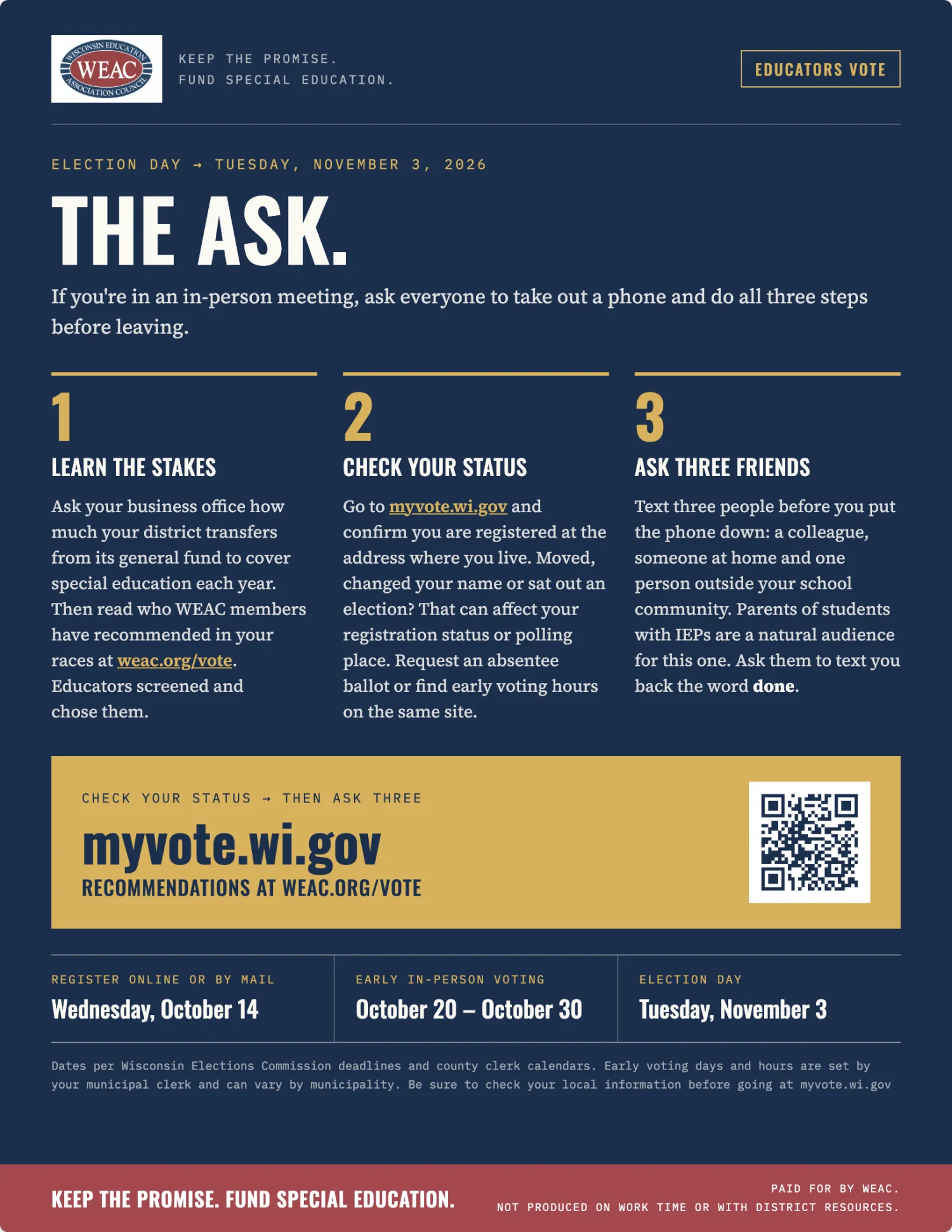
Print out our handout. Post it on your union bulletin board. Bring copies to your general membership meetings and hand them out.
Considerations
Our Union. Our Voice.