8 Things a Contract Does
Levels the playing field.
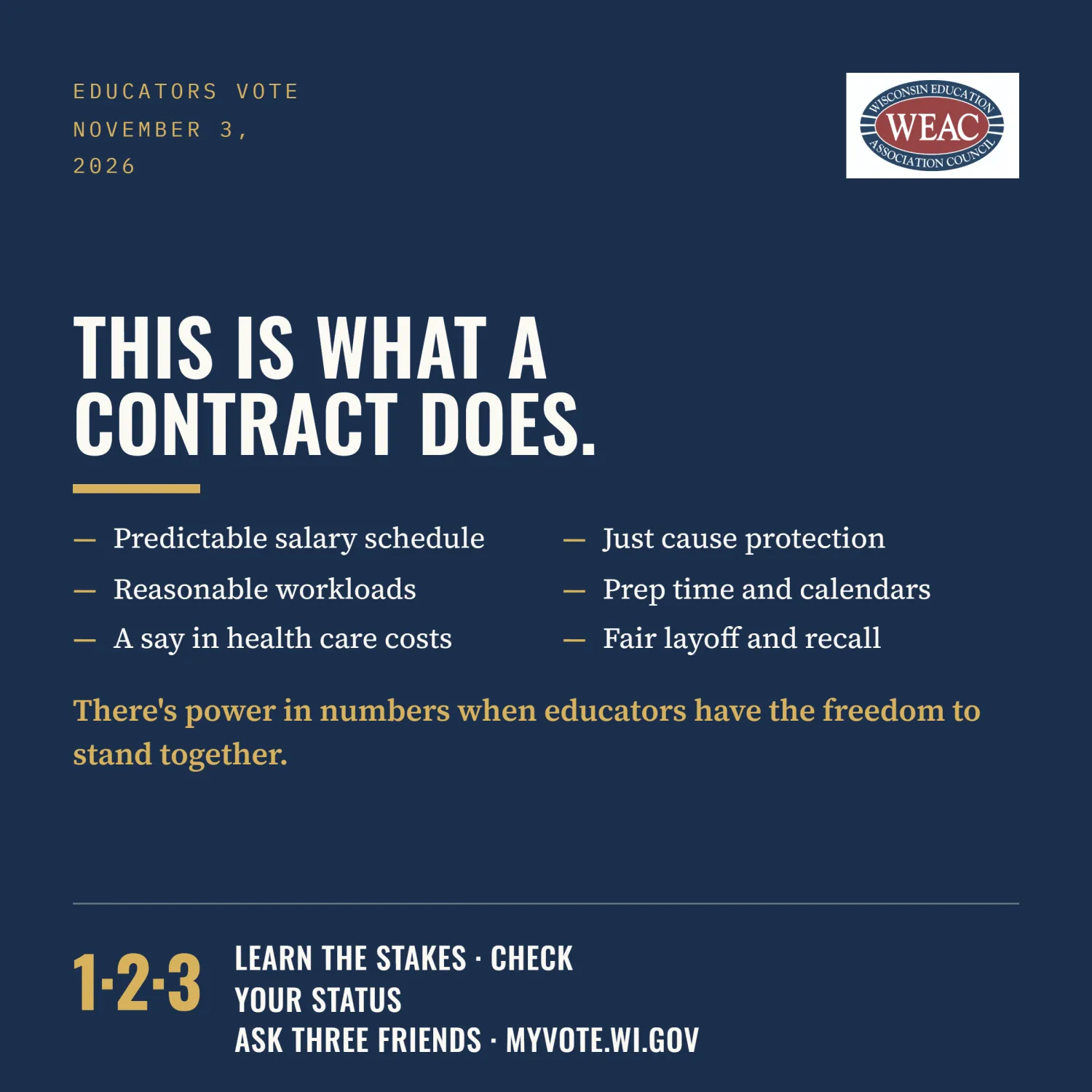
Having a binding contract that lays out enforceable rights puts educators on a more even playing field with administrators, so everyone in the school community is working together and knows our rights and obligations.
Just cause for discipline and nonrenewal.
Knowing there is fairness and objectivity in discipline and dismissal allows educators to openly share their professional opinions, advocate for sound educational practices and stand up for students without fear of repercussions.
Objective, predictable salaries.
The ability to negotiate over all compensation provides stability for students and educators in schools, resulting in less staff turnover and a clear path forward foreducators and our families.
More control over professional time.
Collective bargaining agreements are not just about pay and benefits. They include working conditions including day start and end times, preparation time, school calendars, meeting requirements, personal days and more.
Reasonable workloads.
In collective bargaining negotiations, both sides come to agreement on the amount ofmandatory duties educators are required perform, along with the associated compensation, so everyone is clear about their roles and responsibilities.
Input in health care decisions.
In collective bargaining negotiations, both sides come to agreement on the amount of mandatory duties educators are required perform, along with the associated compensation, so everyone is clear about their roles and responsibilities.
Work assignments and transfers.
Contracts include a fair and transparent process for both.
Fair layoff and recall system.
Contracts lay out a fair and objective process for deciding staff cuts and rights to return.