Adjusted for inflation, school funding has been shrinking for fifteen years.
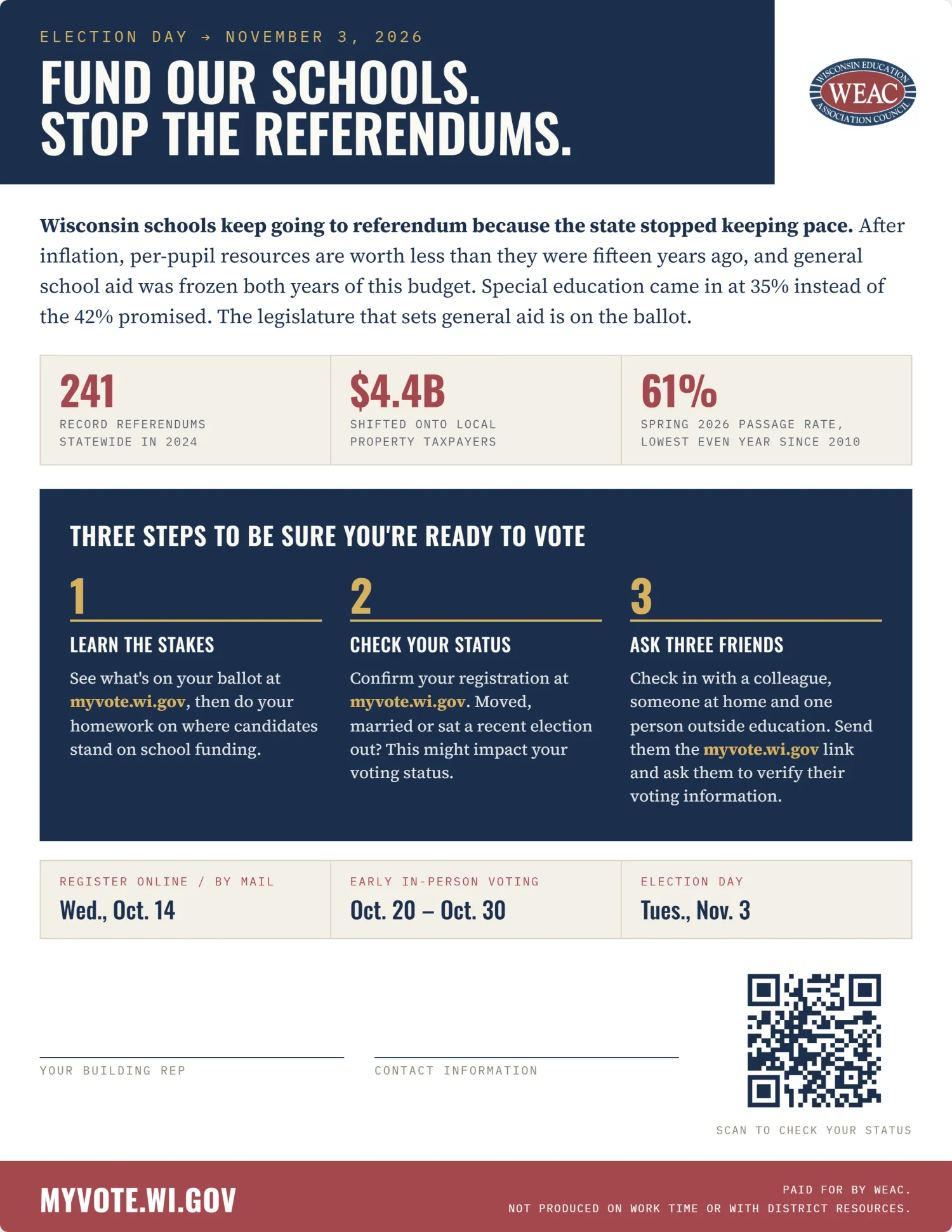
The dollar figure on a budget sheet goes up while its purchasing power goes down.Since the 2011 revenue limit cuts, per-pupil resources have not recovered their realvalue, and the current state budget provides no inflationary increase in generalschool aid in either year. Costs did not hold flat. Health insurance, utilities, fuel, foodservice and wages all kept climbing.
Special education is the clearest broken promise.
Lawmakers promised a historic 42% special education reimbursement this year and 45% next. In November, DPI told districts the initial rate would be 35%, because the money set aside was not enough to cover actual costs. Reimbursement for public districts is sum certain, a fixed pot, so when costs grow the rate falls. Payments for students in the private voucher special needs program are sum sufficient, paid in full, and cover roughly 90% of cost. Two students, two rates, one state.
Referendums are the symptom. General aid is the cure.
Districts held a record 241 referendums in 2024. This April, 72 districts asked voters for just over $1 billion, and only 46 of 75 questions passed, the lowest approval rate of any even-numbered year since 2010. Districts are being sent back to the same taxpayers more often and winning less. Raising state general aid is what ends that cycle, and the legislature that sets general aid is on the ballot November 3.